
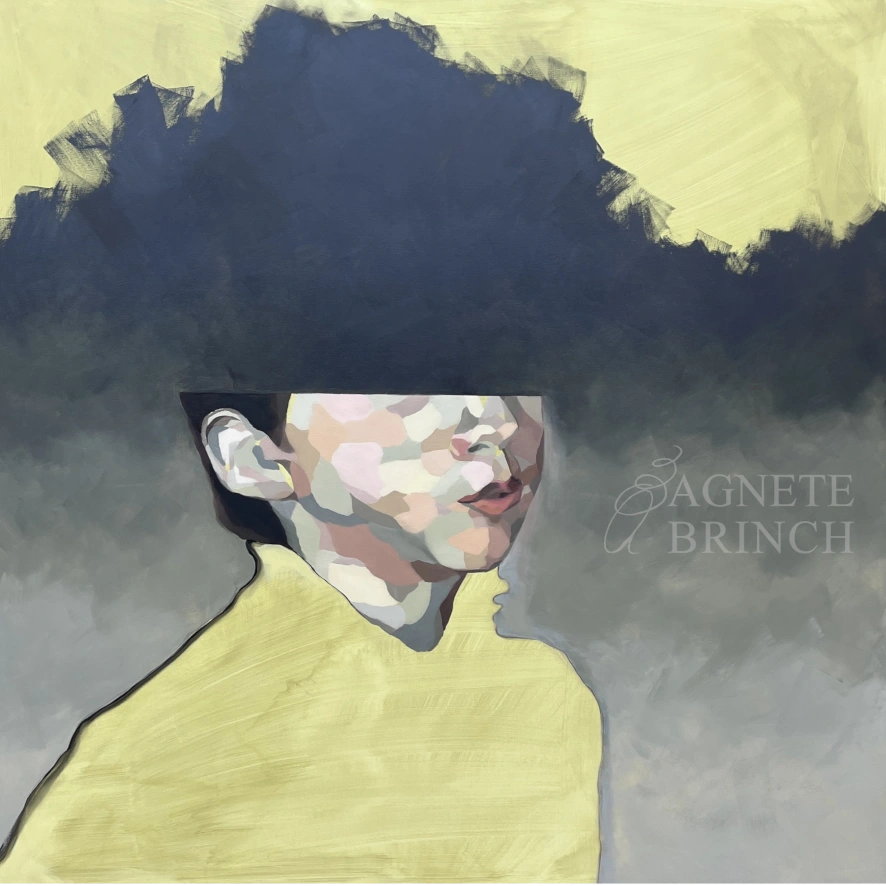
The transformation from unrest—layered in strong colours and expressive strokes—to calm, with balance in colours and brushwork, creates a space of its own for the painting’s eloquent silence. A silence that can be supported by being made not present in sight or in speech.
A quiet space for reflection and the private sphere. As in Virginia Woolf’s novel “A Room of One’s Own”, the downward or averted gaze speaks its own language just as much as the woman seen from behind. You are given only a glimpse of the story and must imagine the rest yourself, making the painting even more compelling and interesting.
An expression of a woman who, like the women in Hammershøi’s 19th-century universe, was seen but not heard. One might almost say that she was part of the home’s interior.
Today, women are seen and heard to a far greater extent than in the 19th century. However, there are still battles to be fought, which I do through my paintings and lectures. Battles for equal rights for both sexes. Battles for insight and awareness. The way we look at girls and women must be brought into focus, so that going forward we think carefully about how we speak and act around our young people.
Nordic Noir is an expression I am very fond of. The darkness highlights the light, and at the same time there is a melancholy. Again, a contrast that inspires me pictorially and linguistically to such an extent that it runs like a continuous black thread through my work.


