
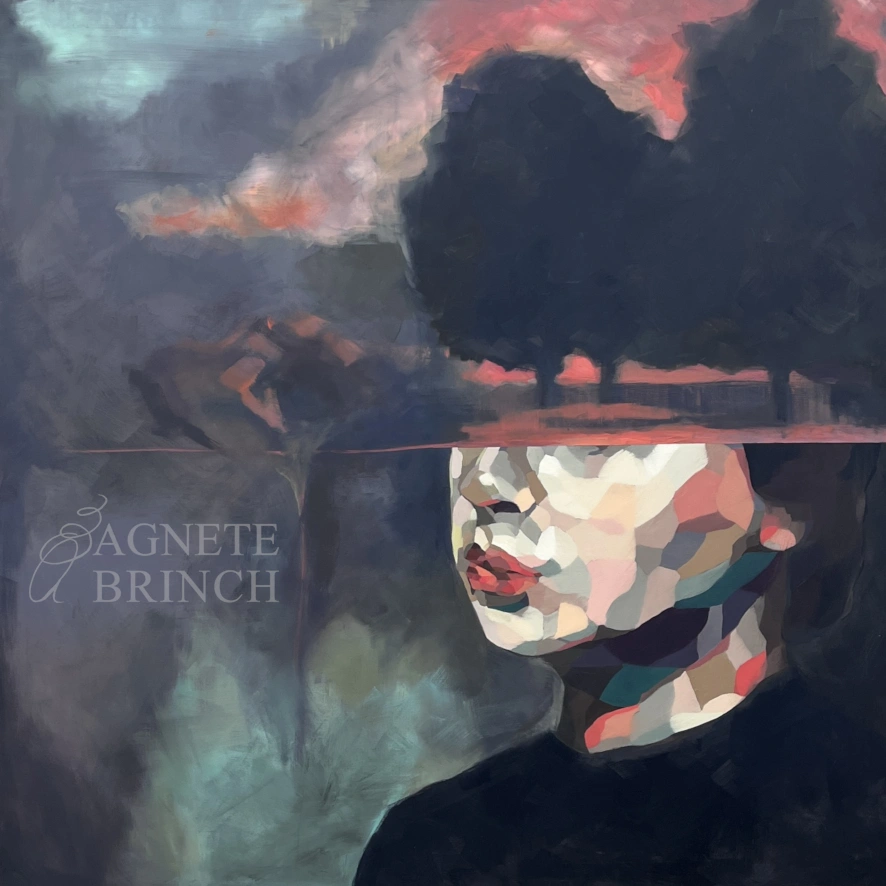
Anna Hammershøi (1868–1935)
Anna Hammershøi is one of the most recognisable, yet also one of the most enigmatic figures in Danish art history.
In 1891, she married Vilhelm Hammershøi, who throughout their marriage used her as his model, and their very private marriage thus gained artistic significance, as she appears in his most famous works, often seen from behind, in quiet rooms with muted colours and sparse furnishings.
Anna Hammershøi was not merely a passive model. She played a central role in shaping the distinctive universe for which Hammershøi’s art is known. Her calm demeanour, simple attire, and recurring poses supported the paintings’ atmosphere of silence, contemplation, and inwardness.
She is rarely depicted with her face turned towards the viewer, which has contributed to interpretations of her as a symbol of anonymity, calm, or distance—but also as an independent, powerful presence within the rooms.
The inspiration in my work is evident, but I also seek to challenge the silence that women in Vilhelm Hammershøi’s time lived with: to be seen but not heard.
The darkness accentuates the light, and at the same time there is a melancholy. Once again, a contrast that inspires me pictorially and linguistically to such an extent that it runs through my work as a recurring black thread. The greyish, greenish, brownish, and bluish shades of black tell a story of the colours of the North as a quietness that resonates in the silent portrait.


